Charleston Fall HVAC Checklist: Preparing Your Heat Pump for the First Cold Snap
Chris Alexander
Early fall is the right time for Charleston-area homeowners to make sure their heating system is ready before the first cold snap arrives. A few safe checks can help you spot comfort issues early,...
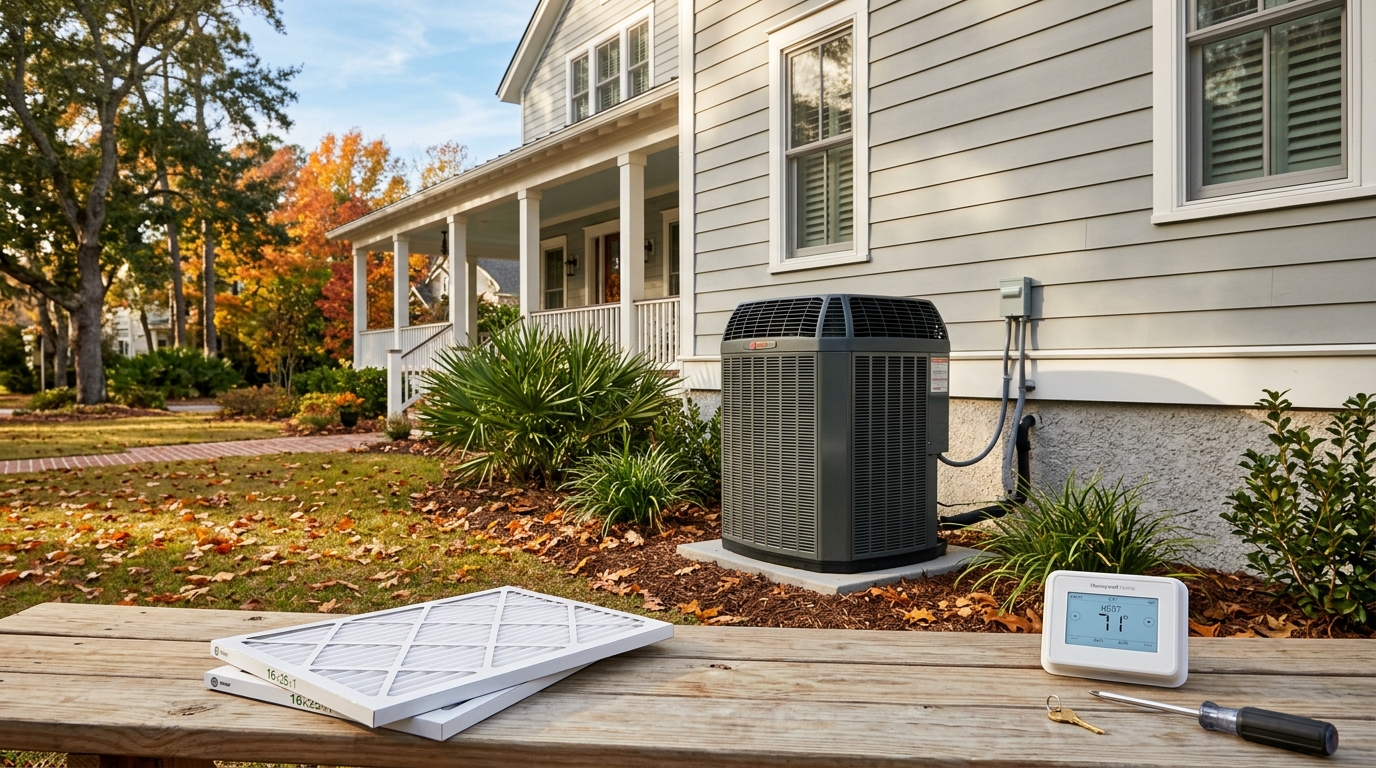
Early fall is the right time for Charleston-area homeowners to make sure their heating system is ready before the first cold snap arrives. A few safe checks can help you spot comfort issues early, while a professional visit can address the components that require trained service. For homes in Charleston, Mount Pleasant, Daniel Island, Isle of Palms, Sullivan’s Island, and Huger, this is a practical way to prepare HVAC for winter without taking unnecessary DIY risks.
Start With the Simple, Safe Checks
Lowcountry weather can remain warm and humid well into fall, so it is easy to overlook the heating side of a heat pump. Before cooler nights become routine, set aside time to review the basics. These homeowner checks do not require opening electrical panels, removing equipment covers, or attempting repairs.
1. Replace or Inspect the Air Filter
A clean filter supports steady airflow through the system. Check the filter size and installation direction, then replace a dirty disposable filter with the correct type. If your home uses a reusable filter, clean and dry it according to the manufacturer’s instructions before reinstalling it.
A clogged filter can contribute to weak airflow and make the system work harder to move conditioned air. If you are unsure how often your household needs a replacement, factors such as pets, allergies, occupancy, and renovation dust can all affect the schedule.
2. Test Thermostat Operation Before You Need Heat
On a mild day, switch the thermostat from cooling to heat and raise the set temperature a few degrees above the room temperature. Give the system time to respond. With a heat pump, the outdoor unit may operate while the system provides warm air indoors; that is generally normal.
Confirm that the thermostat display works, the system changes modes, and warm air begins reaching the registers. Do not repeatedly switch the system back and forth or make wiring adjustments if it does not respond properly. A thermostat that will not change modes, displays an error, or causes inconsistent operation should be evaluated by an HVAC professional.
3. Check Airflow at Registers and Returns
Walk through the home and make sure supply registers and return grilles are open and not blocked by furniture, rugs, curtains, or storage. Compare airflow from room to room and note spaces that feel noticeably cooler, warmer, or more stagnant than others.
Homeowners can safely vacuum dust from the exterior of register covers. However, duct repairs, balancing adjustments, and investigation of persistent uneven temperatures are best left to a trained technician. Alexander Heating & Cooling can help identify whether an airflow concern is related to the filter, equipment, ductwork, controls, or another part of the system.
Give the Outdoor Unit Some Breathing Room
Heat pumps rely on the outdoor unit during both cooling and heating. Inspect the area around the unit and remove loose leaves, pine straw, grass clippings, and other debris from the ground nearby. Trim back vegetation so it is not crowding the equipment, and keep patio items or other obstructions away from it.
Use care around the fins and refrigerant lines. Do not spray the unit with harsh cleaners, bend fins, remove panels, or attempt to clean internal components. If the cabinet is damaged, the coil appears heavily soiled, or the unit has loose electrical parts, schedule professional service rather than trying to correct the issue yourself.
Pay Attention to Sounds and Odors
The first time a heat pump runs in heating mode, homeowners may notice a brief dusty odor as settled dust warms. A mild odor that fades quickly can be normal. Persistent burning smells, electrical odors, smoke, or a smell of melting plastic are not normal; turn the system off if it is safe to do so and contact an HVAC professional.
Likewise, listen for new or concerning sounds, including grinding, squealing, loud rattling, repeated clicking, or banging. Do not remove covers to investigate. Document when the sound occurs and whether it comes from the indoor or outdoor equipment, then share those details during service.
Do Not Forget Condensate and Humidity
Humidity remains an important comfort factor in Charleston and surrounding coastal communities, even as temperatures begin to cool. Your system’s condensate components may still be active during warm, humid fall days. Look for visible water near the indoor unit, drain line, or nearby flooring, and make sure the area around the equipment is accessible.
Homeowners should not disassemble drain components, use chemical drain cleaners, or alter safety switches. Standing water, recurring drain backups, musty odors near the indoor equipment, or unusually damp indoor air warrant a professional inspection. Proper condensate drainage and system operation can help support indoor comfort as the weather changes.
Early-Fall HVAC Maintenance Checklist
Use this simple checklist to complete safe homeowner tasks before colder weather arrives:
- Check and replace or clean the HVAC filter as needed.
- Set the thermostat to heat and confirm the system responds normally.
- Make sure supply registers and return grilles are open and unobstructed.
- Note any rooms with weak airflow or uneven comfort.
- Clear loose debris and vegetation from around the outdoor heat-pump unit.
- Listen for unusual sounds and pay attention to persistent or concerning odors.
- Look for visible water, dampness, or drain-related concerns around indoor equipment.
- Schedule a professional heat pump tune-up in Charleston before the first sustained cold weather.
Why a Professional Heat Pump Tune-Up Matters
Heat pumps in the Lowcountry operate through changing humidity levels, long cooling seasons, coastal air, and periodic cold spells. A professional heating visit is more detailed than a homeowner checklist. During a heat pump tune-up, a qualified technician can inspect heating operation, electrical connections, safety controls, airflow-related components, refrigerant-system performance, condensate management, and the overall condition of the equipment.
Professional service also creates an opportunity to address small concerns before you depend on heat during a cold snap. If you have noticed short cycling, inconsistent temperatures, moisture near the equipment, odd noises, or difficulty switching thermostat modes, mention it when scheduling. Those details can help guide the inspection.
Alexander Heating & Cooling provides fall HVAC maintenance in Charleston, SC, for homeowners who want a knowledgeable review of their heat-pump system before cooler weather settles in. Whether you live in Mount Pleasant, Daniel Island, Isle of Palms, Sullivan’s Island, Huger, or elsewhere in the Charleston area, timely maintenance helps you approach the season with a clearer picture of your system’s condition.
When to Call an HVAC Professional Right Away
Routine homeowner checks are useful, but certain conditions should not wait for a do-it-yourself solution. Contact a professional if you notice an electrical or burning odor, smoke, no heat after thermostat testing, repeated system shutdowns, water around the equipment, a tripped breaker, ice on the unit, damaged wiring, or loud mechanical noises.
For safety, do not attempt electrical repairs, refrigerant work, internal cleaning, duct modifications, or component replacement. These tasks require the proper training, diagnostic tools, and procedures.
Schedule Your Heating Tune-Up
Before the first cold snap catches your household off guard, schedule a heating tune-up with Alexander Heating & Cooling. Our team can help Charleston-area homeowners assess heat-pump performance, investigate concerns found during an early-fall check, and make sure their system receives appropriate professional attention for the season ahead.
FAQ
When should I schedule fall HVAC maintenance in Charleston, SC?
Early fall is a practical time to schedule service because it allows you to test heating operation before colder weather arrives. It can also provide time to address concerns discovered during the visit.
Can I test my heat pump in heating mode myself?
Yes. You can safely set the thermostat to heat and raise the temperature above the current room temperature to see whether the system responds. If it does not produce warm air, shows an error, makes unusual noises, or creates a concerning odor, contact an HVAC professional rather than attempting a repair.
Why is airflow uneven in some rooms?
Uneven airflow can have several causes, including a dirty filter, blocked registers, thermostat settings, ductwork concerns, or equipment issues. Start by checking the filter and clearing obstructions. If the issue continues, a technician can assess the system safely.
Is a dusty smell normal when I turn on heat for the first time?
A brief dusty smell may occur when dust that settled during the cooling season warms up. If the odor persists, smells electrical or like melting plastic, or is accompanied by smoke, turn the system off if it is safe to do so and request service.
Why does humidity still matter in early fall?
Charleston’s humidity can remain elevated during early fall, affecting comfort and condensate drainage. Visible water, dampness around equipment, musty odors, or recurring drain concerns should be evaluated by an HVAC professional.
Our Services
About the Author
Chris Alexander
Christopher Alexander is the owner of Alexander Heating & Cooling, a locally trusted HVAC company serving Charleston and surrounding areas. With decades of hands-on experience, he focuses on helping homeowners get clear answers, reliable service, and comfort solutions that actually fit their homes.