How Coastal Salt Air Affects Outdoor HVAC Equipment on Charleston’s Barrier Islands
Chris Alexander
Salt air, wind-driven sand, high humidity, and limited outdoor space can place added stress on HVAC equipment in Sullivan’s Island, Isle of Palms, and other coastal Charleston communities. While...
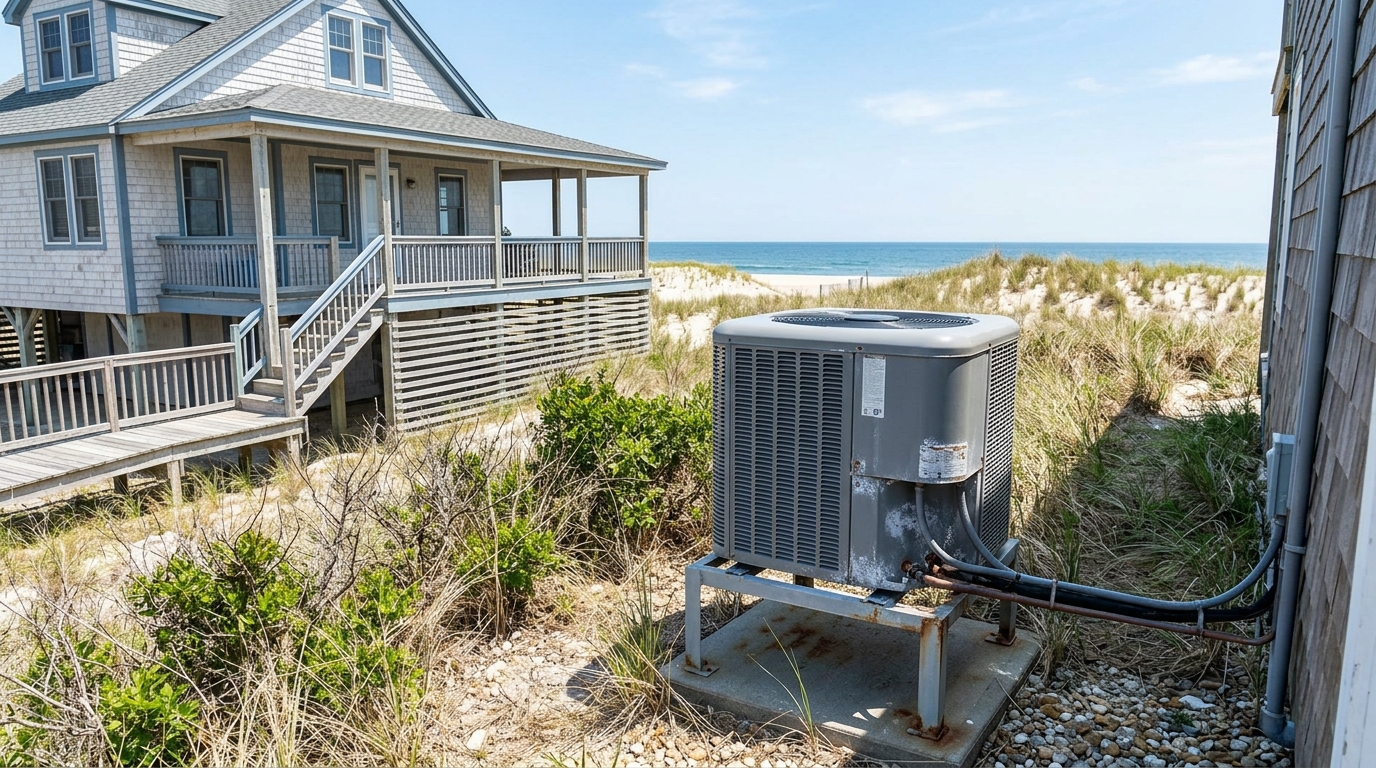
Salt air, wind-driven sand, high humidity, and limited outdoor space can place added stress on HVAC equipment in Sullivan’s Island, Isle of Palms, and other coastal Charleston communities. While corrosion cannot be completely prevented, thoughtful equipment placement, manufacturer-approved care, and regular professional inspections can help identify problems early and support more reliable comfort.
Why Coastal HVAC Equipment Faces Different Conditions
Outdoor condensers and heat pumps are built to operate outside, but barrier-island conditions are different from those in inland neighborhoods. Salt carried in the air can settle on metal components, moisture can remain on surfaces longer in humid weather, and strong coastal winds may carry sand and debris into and around the unit.
On Sullivan’s Island, homes may be elevated, located on compact lots, or designed as historic cottages with limited areas for mechanical equipment. Those site conditions can affect airflow, service access, drainage, and how much exposure the equipment receives. Rental use can add another consideration: systems may run more frequently, and routine care can be missed between guest turnovers unless there is a clear maintenance plan.
How Salt Air, Humidity, Wind, and Sand Affect Outdoor Units
Salt air HVAC corrosion
Salt residue can contribute to corrosion on exposed metal surfaces and components over time. Depending on the system and the extent of exposure, this may affect cabinet panels, fasteners, coil fins, electrical connections, refrigerant-line components, and other outdoor-unit parts. Corrosion does not always mean a system has failed, but it should be evaluated before a small concern becomes a larger repair.
Salt air HVAC corrosion cannot be eliminated completely in a coastal setting. The practical goal is to reduce unnecessary exposure where possible, monitor the equipment routinely, and follow the manufacturer’s care requirements.
Wind-driven sand and debris
Wind exposure can push sand, leaves, pine straw, and other debris against the outdoor unit. Accumulation around the cabinet or coil can restrict airflow, while abrasive sand may contribute to wear on exterior surfaces. Equipment located beneath decks or close to landscaping can also collect debris quickly if clearances are limited.
Persistent humidity
Charleston’s humid coastal climate can keep equipment damp for longer periods. That moisture may accelerate corrosion when salt residue is present and can make drainage and airflow especially important. Indoor comfort may also suffer if the HVAC system cannot manage humidity effectively, even when it is still producing some cooling.
Common Signs Your Coastal HVAC System Needs Attention
Homeowners do not need to disassemble or access electrical components to recognize potential issues. Contact a qualified professional if you notice:
- Visible rust, pitting, flaking paint, or deteriorating metal on the outdoor cabinet or nearby components
- Bent, dirty, or visibly damaged coil fins
- Reduced cooling or heating performance, uneven temperatures, or longer run times
- Higher energy bills without an obvious change in household use
- New rattling, buzzing, grinding, or unusually loud operation
- Frequent system cycling or difficulty maintaining the thermostat setting
- Water collecting around the equipment or signs of drainage problems
- Debris buildup around the unit that limits airflow or blocks service access
These signs can have several causes, not all of which are corrosion-related. An inspection helps identify the actual condition of the equipment and the appropriate next step.
Equipment Placement Matters on Sullivan’s Island
Placement is often a balancing act for Sullivan’s Island HVAC installations. Elevated homes may require equipment to be located beneath or beside the structure, while historic cottages and compact properties may offer only a few workable locations. Local requirements, flood considerations, access needs, and architectural constraints can all influence the final design.
A location should allow the system to receive adequate airflow and leave enough room for safe professional service. It should also be considered in relation to roof runoff, standing water, vegetation, dryer vents, pedestrian traffic, and the most direct path of prevailing wind. Moving a unit is not always practical or necessary, but placement should be reviewed carefully during a repair, renovation, or replacement discussion.
For homes used as short-term rentals or seasonal properties, accessible placement is particularly valuable. Service technicians need room to inspect, clean, and repair the equipment efficiently, and owners or property managers need a realistic plan for checking the system between stays.
Cleaning and Rinsing Need the Right Approach
Homeowners often ask whether they should rinse salt from an outdoor unit. The right answer depends on the equipment manufacturer’s instructions, the installation, local water conditions, and the system’s current condition. Improper cleaning methods, excessive pressure, or unsuitable chemicals can damage delicate coil fins, electrical areas, or protective finishes.
Alexander Heating & Cooling recommends following the manufacturer’s guidance and consulting an HVAC professional for coastal-specific cleaning needs. A technician can assess buildup, use appropriate methods and products, and verify that the system is operating properly afterward. Do not open electrical panels, spray inside electrical compartments, or attempt repairs involving wiring or refrigerant components.
Why Regular Coastal HVAC Inspections Are Important
Regular inspections give technicians an opportunity to look for early corrosion, airflow restrictions, coil condition concerns, drainage issues, mounting problems, and declining performance. In a coastal environment, waiting until the system stops cooling can mean a more involved repair and added inconvenience—especially for a rental home with incoming guests.
Coastal HVAC maintenance in Charleston, SC, should be tailored to the property and equipment rather than treated as a one-size-fits-all task. Alexander Heating & Cooling can evaluate the outdoor unit’s condition, review maintenance history, check operating performance, and explain whether repair, monitoring, placement changes, or replacement planning makes the most sense.
Homeowner Checklist for Coastal Outdoor HVAC Equipment
- Visually check the area around the outdoor unit for leaves, sand, pine straw, or stored items that may block airflow.
- Keep landscaping trimmed back enough to preserve manufacturer-required clearances.
- Look for visible rust, damaged panels, bent fins, or unusual water accumulation, without touching internal components.
- Pay attention to changes in comfort, humidity, noise, cycling, and utility costs.
- Schedule professional maintenance and inspections at intervals appropriate for your equipment and coastal exposure.
- For rental properties, establish a plan with the owner or property manager to report concerns promptly between guest stays.
- Save maintenance records and repair recommendations to support future replacement decisions.
Questions to Ask When Repairing or Replacing Coastal Equipment
When discussing a repair or replacement, ask questions that address the home’s actual exposure and layout:
- What corrosion or wear is present, and which components are affected?
- Is the system’s reduced performance related to the outdoor unit, indoor equipment, ductwork, drainage, or another issue?
- Does the current location provide adequate airflow, drainage, and service access?
- Are there practical placement options that better fit an elevated home, historic cottage, or limited-equipment site?
- What maintenance does the manufacturer recommend for this model in a coastal environment?
- What inspections and cleaning procedures should be scheduled going forward?
- How will the proposed equipment support humidity control and comfort for this home’s occupancy and rental use?
- What warranty terms and maintenance requirements apply to the selected system?
For Isle of Palms HVAC and Sullivan’s Island HVAC needs, a good recommendation should consider more than system size. It should account for the home’s exposure, elevation, access, local site limitations, comfort goals, and the condition of existing equipment.
Schedule a Coastal HVAC Evaluation
Coastal conditions can be demanding, but homeowners do not have to guess about the condition of their outdoor HVAC equipment. Alexander Heating & Cooling can evaluate systems serving Sullivan’s Island, Isle of Palms, and coastal Charleston homes, explain any visible concerns, and recommend practical next steps based on the equipment and property.
Schedule an HVAC evaluation with Alexander Heating & Cooling to address corrosion concerns, reduced performance, equipment placement questions, or a planned coastal-system replacement.
FAQ
Can salt air damage an outdoor HVAC unit?
Salt-laden air can contribute to corrosion on exposed metal parts and surfaces over time, particularly when combined with coastal humidity. The degree of impact varies by equipment, placement, maintenance history, and exposure. A professional inspection can help determine the condition of a specific unit.
Can corrosion be completely prevented on Sullivan’s Island?
No. In a coastal environment, corrosion cannot be completely prevented. However, appropriate placement, routine inspections, manufacturer-approved maintenance, and prompt attention to developing issues can help manage exposure and detect concerns earlier.
Should I hose down my outdoor HVAC unit to remove salt?
Follow the equipment manufacturer’s instructions and seek professional guidance. Some cleaning practices may be appropriate in certain situations, but improper water pressure, cleaning products, or spraying near electrical areas can damage the unit. Do not open panels or perform electrical work yourself.
How often should coastal HVAC equipment be inspected?
The right schedule depends on the system, its proximity to salt exposure, operating demands, and manufacturer recommendations. A qualified HVAC professional can recommend an inspection and maintenance cadence that fits your property.
Does equipment placement affect HVAC longevity and performance?
Yes. Placement can affect exposure to wind, salt, sand, roof runoff, vegetation, standing water, and restricted airflow. It also affects whether technicians can access the equipment safely for maintenance and repairs. Placement should be part of the conversation when replacing equipment at a coastal home.
Our Services
About the Author
Chris Alexander
Christopher Alexander is the owner of Alexander Heating & Cooling, a locally trusted HVAC company serving Charleston and surrounding areas. With decades of hands-on experience, he focuses on helping homeowners get clear answers, reliable service, and comfort solutions that actually fit their homes.