
Heat Pump Not Heating? What Charleston Homeowners Should Check Before Calling for Service
Chris Alexander
When temperatures drop in Charleston, it is common to wonder whether a heat pump is working as it should. A heat pump may deliver air that feels less hot than a furnace while still heating...
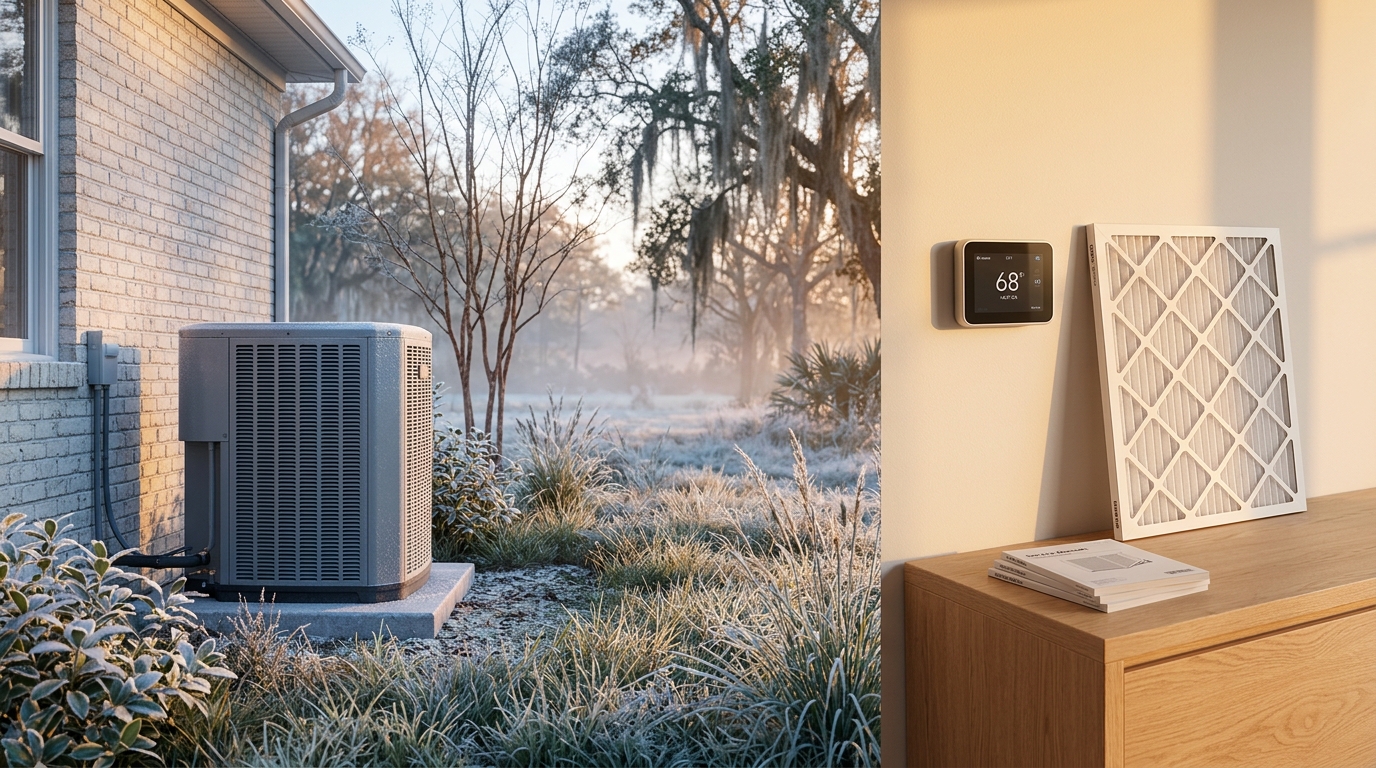
When temperatures drop in Charleston, it is common to wonder whether a heat pump is working as it should. A heat pump may deliver air that feels less hot than a furnace while still heating effectively, but weak airflow, incorrect thermostat settings, a clogged filter, or an outdoor-unit issue can reduce comfort. A few safe checks can help you identify what is normal and when to request professional help.
How Heat Pumps Behave in Cold Charleston Weather
Heat pumps move heat rather than creating it through combustion. Even during a cold spell, there is heat energy outside that the system can transfer indoors. Because of that process, supply air often feels warm rather than intensely hot. Holding a hand over a vent is not always the best measure of performance; the more useful question is whether the home is gradually reaching and maintaining the thermostat setting.
In Charleston and surrounding communities, rapid weather changes, damp air, and occasional near-freezing temperatures can make heat-pump operation seem different from day to day. Longer run times during colder weather can be normal, especially if the system is steadily maintaining indoor comfort.
Start With Safe Thermostat Checks
For homeowners searching for heat pump troubleshooting in Charleston, the thermostat is a sensible first place to look. These are visual and setting checks that can be performed safely.
- Confirm the thermostat is set to Heat, not Cool, Off, or Fan Only.
- Set the temperature a few degrees above the current room temperature and allow time for the system to respond.
- Make sure the fan setting is on Auto. A fan set to On may continue circulating air between heating cycles, which can feel cool.
- Check whether the thermostat display shows a low-battery alert or an obvious error message.
- Avoid making large, repeated temperature changes. Heat pumps generally operate best with steady settings.
If the display shows Aux Heat
or Emergency Heat, do not assume the system has failed. Auxiliary heat may engage when outdoor temperatures are low, when the heat pump is in defrost mode, or when the thermostat calls for additional heat. Emergency Heat is usually a manual backup setting and should not be used routinely unless a qualified technician has advised it.
Check the Air Filter and Indoor Airflow
A dirty air filter is one of the most common reasons a heat pump may not appear to heat properly. Restricted airflow can keep warm air from reaching the living areas efficiently and may place unnecessary strain on the equipment.
Turn the system off at the thermostat before inspecting the filter. If it is visibly dusty, gray, or clogged, replace it with the correct size and type recommended for the system. Do not force a filter into place or use a filter with a higher restriction rating unless it is appropriate for the equipment.
Also make sure supply registers are open and unobstructed by furniture, rugs, or curtains. Check that return-air grilles are not blocked. If airflow remains noticeably weak throughout the home after these simple checks, Alexander Heating & Cooling can evaluate the cause. Duct restrictions, blower concerns, and internal equipment issues should be assessed by a trained professional.
Look at the Outdoor Unit From a Safe Distance
The outdoor portion of a heat pump needs open space to move air. From a safe distance, look for leaves, pine straw, branches, or other debris around the unit. If there is loose debris around the exterior, it is generally safe to clear it away carefully without touching the coil fins, fan, wiring, or refrigerant lines.
Do not remove panels, reach through the grille, straighten coil fins, spray electrical components, chip ice from the unit, or attempt to restart it by manipulating breakers or wiring. Those tasks can create safety risks and can damage the system. If the unit is heavily iced over, damaged, making severe noises, or not operating, request Charleston heating repair instead of attempting an internal repair.
Understand Defrost Cycles and Frost Buildup
During cold, damp weather, light frost can develop on the outdoor coil. Heat pumps periodically enter a defrost cycle to clear that frost. During defrost, you may notice a temporary change in sound, visible steam rising from the outdoor unit, or cooler air from indoor vents for a short period. Auxiliary heat may come on while the system defrosts.
These conditions can be normal when they are brief and the system returns to regular heating afterward. Persistent, thick ice that does not clear, repeated defrosting, or a unit that never resumes normal operation should be inspected. Defrost controls, sensors, airflow problems, refrigerant concerns, and other internal causes require professional diagnosis.
Why Auxiliary Heat May Appear
Auxiliary heat is designed to support the heat pump when it needs extra help meeting the indoor temperature demand. Seeing an auxiliary-heat indicator for a limited time during a Charleston cold spell is not necessarily a problem. It may appear after a large thermostat adjustment, during defrost, or when outdoor conditions make it harder for the heat pump to keep up on its own.
However, if auxiliary heat remains on frequently, the home is not warming, or energy use seems unusually high, schedule service. Alexander Heating & Cooling can determine whether the system is operating as designed or whether it needs repair or adjustment.
Noises and Odors That Deserve Attention
Some operating sounds are expected. You may hear the outdoor unit start and stop, the fan run, or a brief shifting sound when the system changes modes. A mild dusty smell can also occur when heating is first used after a long period.
Turn the system off and request service if you notice persistent grinding, loud banging, metal-on-metal sounds, repeated clicking without normal operation, a burning or electrical odor, or smoke. Do not investigate inside the equipment or try to repair electrical parts yourself. If you smell gas, leave the area and contact the appropriate emergency resource; although this article focuses on heat pumps, any suspected gas odor should be treated seriously.
Heat Pump Troubleshooting Checklist
- Set the thermostat to Heat and raise the setpoint a few degrees above room temperature.
- Set the fan to Auto.
- Give the system time to heat gradually rather than changing settings repeatedly.
- Check and replace a visibly dirty air filter.
- Open supply registers and clear furniture or other obstructions from return grilles.
- Clear loose leaves and debris from around the outdoor unit without touching internal components.
- Observe whether the system is briefly defrosting or whether frost and ice persist.
- Note any thermostat messages, unusual sounds, odors, or changes in airflow to share with a technician.
Do not open electrical panels, reset breakers repeatedly, handle refrigerant lines, add refrigerant, remove equipment covers, or attempt repairs to motors, capacitors, controls, or wiring. These repairs require specialized training and tools.
When to Schedule Professional Heat Pump Service
A heat pump not heating in Charleston, SC, may need professional attention if it runs continuously without improving indoor comfort, blows consistently cool air in Heat mode, has poor airflow after a filter change, develops persistent ice, or repeatedly relies on auxiliary heat. Service is also appropriate when you notice water leaks, error codes, tripped breakers, unusual noises, or electrical odors.
Alexander Heating & Cooling serves Charleston and surrounding communities with careful heat-pump evaluation and Charleston heating repair. A qualified technician can inspect system operation, airflow, controls, defrost performance, and other components without guesswork or unsafe DIY steps.
FAQ
Is it normal for a heat pump to run for a long time during cold weather?
It can be. Heat pumps often run longer in colder conditions because they transfer heat gradually. If the home reaches and maintains the thermostat setting, longer cycles may be normal. If comfort does not improve, professional service can help identify the cause.
Why does my heat pump air not feel very hot?
Heat-pump supply air commonly feels warm rather than furnace-hot. Check whether the home is warming over time rather than relying only on how the air feels at a register. Consistently cool air, weak airflow, or an inability to maintain the temperature warrants service.
What does Aux Heat mean on my thermostat?
Aux Heat means the system’s supplemental heat source is assisting the heat pump. It may occur during a cold spell, after a significant temperature increase, or during a defrost cycle. Frequent or extended auxiliary-heat operation should be evaluated by a professional.
Should I turn on Emergency Heat if my home feels cold?
Emergency Heat is generally intended for use when the heat pump cannot operate properly and should not be a routine setting. If you are unsure whether to use it, contact Alexander Heating & Cooling for guidance and service.
Can I remove ice from my outdoor heat pump?
Do not chip, pry, or pour hot water on ice, and do not open the unit. Light frost may clear during a normal defrost cycle. Heavy or persistent ice should be inspected by a qualified technician.
Request Heat Pump Repair in Charleston
If safe checks have not restored comfort, or you are seeing warning signs, request heat pump service from Alexander Heating & Cooling. Our team can help homeowners in Charleston and nearby communities identify the source of heating concerns and recommend the appropriate repair steps.
Our Services
About the Author
Chris Alexander
Christopher Alexander is the owner of Alexander Heating & Cooling, a locally trusted HVAC company serving Charleston and surrounding areas. With decades of hands-on experience, he focuses on helping homeowners get clear answers, reliable service, and comfort solutions that actually fit their homes.
