Uneven Temperatures, Weak Airflow, and High Bills: Could Your Ductwork Be the Problem?
Chris Alexander
Uneven comfort, weak airflow, unusual noises, and persistent dust can all point to ductwork concerns. Because ducts move conditioned air throughout your home, leaks, damage, poor insulation, or...
Uneven comfort, weak airflow, unusual noises, and persistent dust can all point to ductwork concerns. Because ducts move conditioned air throughout your home, leaks, damage, poor insulation, or return-air restrictions can make your HVAC system work harder to deliver the comfort you expect. A professional evaluation can help Charleston-area homeowners identify the source of the problem and determine an appropriate next step.
Why Ductwork Matters to Home Comfort
Your duct system is the pathway between your heating and cooling equipment and the rooms where you live. When that pathway is properly connected, sealed, sized, and insulated, conditioned air can travel more consistently through the home. When it has gaps, loose connections, crushed sections, or insulation problems, some rooms may receive less air than others.
For homes in Charleston, Mount Pleasant, Daniel Island, Isle of Palms, Sullivan’s Island, and Huger, ductwork often passes through attics, crawlspaces, garages, or other unconditioned areas. Heat and humidity in those spaces can make duct leaks and inadequate insulation especially important to address. Alexander Heating & Cooling can assess the duct system alongside the HVAC equipment to help identify issues affecting comfort and performance.
Common Signs of Ductwork Problems
Many comfort complaints can have more than one cause, including thermostat settings, equipment concerns, dirty filters, or ductwork defects. Still, the following symptoms are good reasons to schedule a Charleston duct inspection.
Uneven Temperatures Between Rooms
One of the most common warning signs is a home with noticeably warmer or cooler rooms. You may find that an upstairs bedroom stays warmer than the rest of the house, a room over the garage never seems comfortable, or a distant room receives less heating or cooling than nearby spaces.
Uneven temperatures in a house can occur when ducts are leaking, disconnected, undersized, kinked, or poorly routed. They can also result from inadequate return-air pathways, insulation gaps, equipment capacity concerns, or air-distribution design issues. A professional should evaluate the full system rather than assuming one cause.
Weak HVAC Airflow at Supply Vents
Place your hand near several supply vents while the system is running. If airflow feels noticeably weaker in certain rooms than in others, the issue may involve a blocked register, a dirty filter, a blower concern, a damaged duct run, or a duct connection that has loosened.
Weak HVAC airflow should not be ignored simply because the system still turns on. Restricted or leaking ducts can interfere with consistent air delivery and may leave certain areas of the home uncomfortable. Alexander Heating & Cooling can help determine whether the concern is inside the duct system, the air handler, or another component of your HVAC setup.
Excessive Dust Around the Home
Dust is a normal part of daily life, but unusually frequent dust buildup may be worth discussing with an HVAC professional. Leaky return ducts can potentially draw air from attics, crawlspaces, or other unconditioned areas before it passes through the system. Gaps in ductwork can also allow conditioned air to escape before it reaches living spaces.
Excess dust does not automatically mean that your ducts are the only issue. Filter selection, housekeeping, construction activity, pets, and other factors can contribute. A duct inspection can help determine whether duct leakage or return-air conditions are part of the picture.
Rattling, Whistling, or Other Unusual Sounds
Rattling may occur when a duct section, register, or connection is loose. Whistling can sometimes signal air moving through a small gap, a restrictive grille, or an improperly sized opening. Banging or popping may be related to duct movement as temperatures change.
While some HVAC sounds are minor, new, persistent, or increasingly noticeable noises deserve attention. A technician can inspect accessible duct connections and related components to identify whether a repair is needed.
Visible Damage or Disconnected Ducts
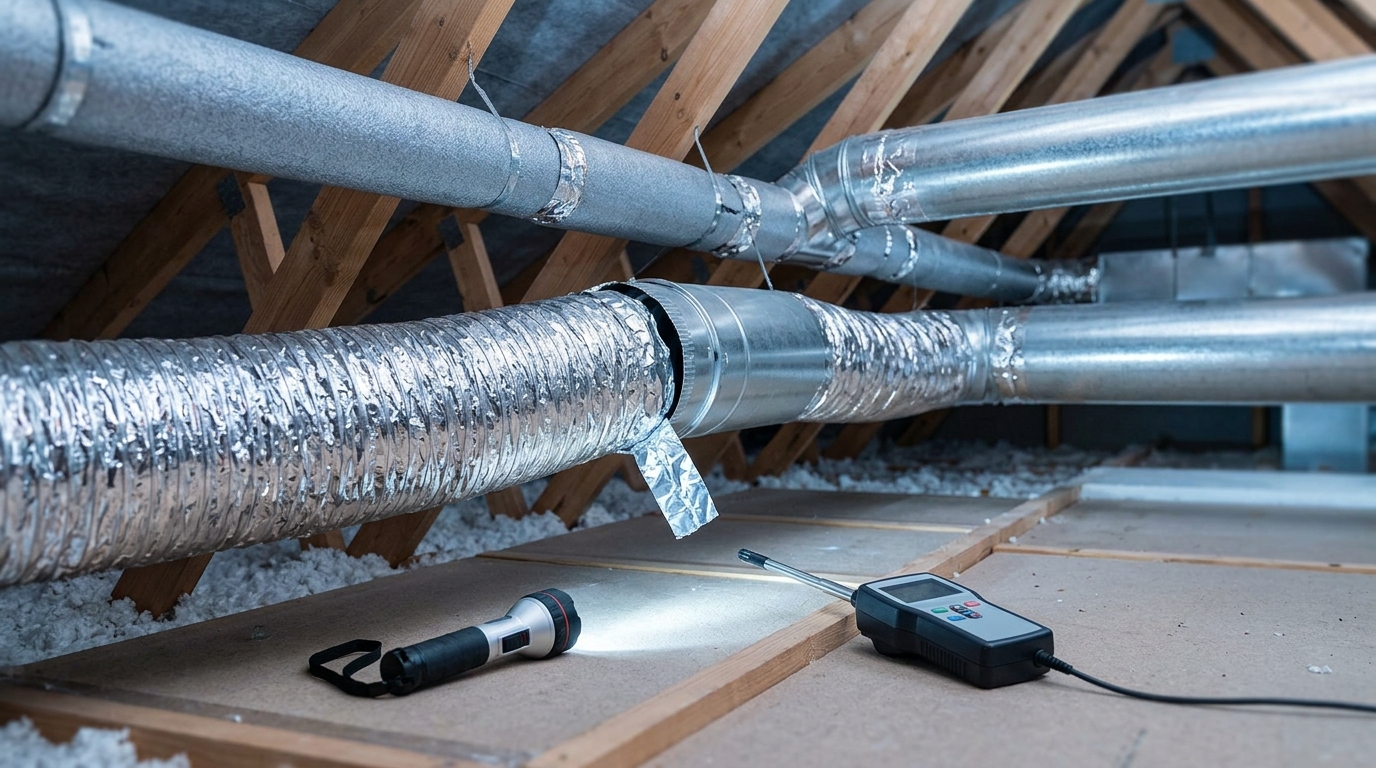
If you can safely see accessible ducts from a normal standing area, look for obvious signs such as torn flexible duct material, sagging runs, crushed sections, loose insulation jackets, or ducts that appear disconnected. Do not enter an attic or crawlspace, step around ceiling framing, handle insulation, or attempt repairs in confined spaces without appropriate training and safety precautions.
Damaged or disconnected ducts can allow conditioned air to escape into unconditioned areas. They can also affect how evenly air is distributed through the home. Professional ductwork repair in Charleston, SC, may involve reconnecting sections, supporting duct runs correctly, replacing damaged materials, or improving seals where appropriate.
Why Attics and Crawlspaces Deserve Extra Attention
Charleston’s warm, humid climate can make attic and crawlspace duct conditions especially relevant. A leak in ductwork located in a hot attic may release cooled air into a space where it does not help your household. In a humid crawlspace, duct insulation damage or unsealed connections may contribute to comfort concerns and place additional demands on the system.
Insulation around ducts is also important. When duct insulation is torn, compressed, missing, or inadequate for the location, the air inside the duct can gain or lose heat before reaching a room. Condensation concerns may also need professional attention, particularly where humid air and cold duct surfaces meet.
Return-Air Problems Can Affect the Entire System
Supply ducts send conditioned air into rooms, while return ducts bring air back to the HVAC system to be heated or cooled again. Both sides need to work together. A return-air issue can contribute to pressure imbalances, reduced circulation, noisy operation, or rooms that are difficult to keep comfortable.
Common return-side concerns can include undersized or restricted return pathways, disconnected return ducts, poorly sealed connections, blocked grilles, or filters that need replacement. Closing interior doors can also affect airflow in some homes when there is not an adequate path for air to return to the system. During an evaluation, Alexander Heating & Cooling can assess whether return-air conditions may be contributing to the problem.
Homeowner Symptom Checklist
Consider requesting an HVAC or ductwork evaluation if you notice one or more of these conditions:
- Rooms that remain warmer or cooler than the rest of the home
- Weak airflow from one or more supply vents
- Dust accumulating more quickly than expected
- Rattling, whistling, popping, or other unfamiliar duct-related sounds
- Visible damage, sagging, crushed areas, or disconnected accessible duct sections
- Damaged, missing, or compressed duct insulation
- Comfort problems that become more noticeable during very hot or humid weather
- Return grilles that seem restricted or rooms that feel stuffy when doors are closed
- An HVAC system that runs frequently without delivering consistent comfort
What a Professional Duct Inspection May Evaluate
A Charleston duct inspection is not a one-size-fits-all service. The details depend on the home, system type, duct accessibility, and the symptoms you are experiencing. In general, a professional may evaluate accessible duct runs, connections, insulation condition, support and routing, signs of leakage, supply airflow, return-air pathways, registers and grilles, filter condition, and the relationship between the duct system and HVAC equipment.
The inspection may also consider whether a comfort issue is more likely related to ductwork, system operation, thermostat controls, building insulation, or a combination of factors. This broader approach helps avoid making assumptions based on one symptom alone.
When Duct Repair, Sealing, Insulation, or Replacement May Be Considered
The right solution depends on what the inspection finds. Minor connection issues or accessible gaps may call for professional duct sealing or repair. Torn, crushed, poorly supported, or disconnected sections may need to be repaired or replaced. If insulation is missing or deteriorated, improving duct insulation may be recommended to help protect air traveling through unconditioned spaces.
In some homes, older duct systems may have widespread deterioration, unsuitable routing, significant damage, or design limitations that make replacement a more practical option than repeated repairs. Alexander Heating & Cooling can explain the condition of the accessible ductwork, discuss available options, and help you make an informed decision without pressure.
Schedule a Ductwork Evaluation in the Charleston Area
If your home has uneven temperatures, weak airflow, excessive dust, or unusual HVAC noises, it is worth having the system evaluated. Alexander Heating & Cooling serves homeowners throughout Charleston and nearby communities, including Mount Pleasant, Daniel Island, Isle of Palms, Sullivan’s Island, and Huger.
Request an HVAC or ductwork evaluation to learn whether duct repair, sealing, insulation improvements, or replacement may help address the comfort and performance concerns in your home.
FAQ
How can I tell whether uneven room temperatures are caused by ductwork?
Ductwork is one possible cause, particularly when the affected room also has weak airflow, unusual sounds, or visible duct damage. However, uneven temperatures can also be related to insulation, windows, thermostat placement, HVAC equipment, or return-air limitations. A professional evaluation can help identify the contributing factors.
Can duct leaks cause weak HVAC airflow?
They can. Leaks, loose connections, crushed sections, or disconnected ducts may reduce the amount of conditioned air that reaches certain vents. Because weak airflow can also come from filters, blower components, registers, or equipment concerns, an inspection should consider the entire system.
Should I repair ductwork myself in an attic or crawlspace?
It is safer to have attic and crawlspace ductwork evaluated by a qualified HVAC professional. These areas can involve heat, limited visibility, unstable footing, electrical hazards, insulation exposure, and confined-space conditions. A technician can assess accessible ductwork and recommend an appropriate repair approach.
What is included in a Charleston duct inspection?
An inspection may include a review of accessible duct connections, duct condition, insulation, support, visible leakage concerns, supply vents, return-air pathways, filters, and related HVAC components. The exact scope depends on the home and the symptoms being investigated.
When should ductwork be replaced instead of repaired?
Replacement may be considered when ductwork has extensive damage, recurring connection failures, widespread insulation deterioration, unsuitable routing, or age-related decline that makes repairs less practical. A professional can explain whether targeted repairs or a larger replacement approach better fits the condition of your system.
Our Services
About the Author
Chris Alexander
Christopher Alexander is the owner of Alexander Heating & Cooling, a locally trusted HVAC company serving Charleston and surrounding areas. With decades of hands-on experience, he focuses on helping homeowners get clear answers, reliable service, and comfort solutions that actually fit their homes.